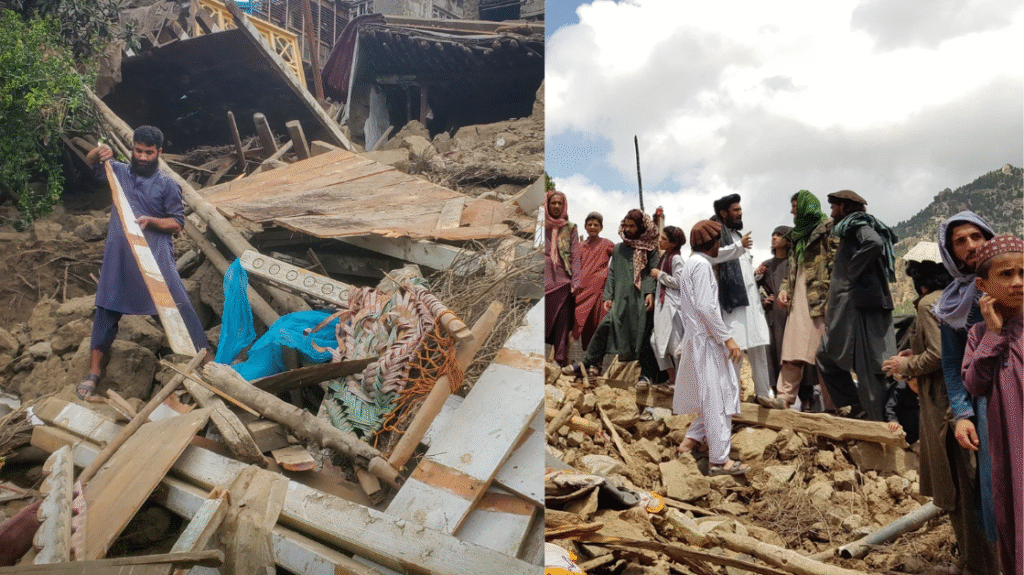
A powerful Afghanistan earthquake struck in the dead of night on Sunday, causing heartbreak and chaos in its wake. Residents of eastern provinces woke up to collapsed homes, landslides, and the terrifying reality of loss—all centered around Kunar and Nangarhar.
Where and What Happened
At 11:47 pm, a magnitude 6.0 earthquake shook eastern Afghanistan near Jalalabad. The tremor was unusually shallow—just 8–10 km deep—making it especially destructive. Its epicenter was located around 27 km east-northeast of Jalalabad. Numerous powerful aftershocks followed, amplifying the destruction.
A Terrible Toll in Afghanistan earthquake
The Taliban-run government confirmed at least 800 people have died and over 2,500 are injured in Afghanistan earthquake—though these numbers keep climbing as rescuers reach remote valleys and villages. Many homes—made of fragile mud bricks and basic construction—were flattened. Entire communities vanished under the rubble.
Stories of Survival and Despair
In Nurgal district, a villager tearfully shared, “Children are under the rubble. The elderly are under the rubble. Young people are under the rubble… We need help here.” Another survivor, Sadiqullah, recounted how he was trapped under debris after trying to rescue his children; tragically, his wife and two sons died, while he and his injured father were later found by rescuers.
Rescue Efforts Rising Against Odds
Aid teams are scrambling. Mountains and landslides have blocked roads, forcing many rescuers to trek hours just to reach survivors. Helicopters—dozens of them—have been flying victims to hospitals from Mazar Dara and other devastated areas. Medical facilities are overwhelmed, with many injured being treated in makeshift setups outdoors.
International Support & Humanitarian Warnings
The UN, Red Cross, and NGOs say the Afghanistan earthquake has hit an already fragile humanitarian situation—made worse by droughts and refugee returns. Women and children face greater danger due to access barriers and a shortage of female rescue personnel.
International responses have started pouring in. Pakistan—where the quake was also felt—offered assistance despite geopolitical tensions. India sent tents and food, while Iran promised medical aid.
Why Was This Quake So Deadly?
Afghanistan sits near a major tectonic collision zone—where the Indian and Eurasian plates grind together. This geological setting results in frequent, often destructive quakes. Just last year, western Herat province suffered deadly tremors that killed well over a thousand people.
Abundant faults like Chaman, Kunar, Panjshir, and more cut across the region. Coupled with poorly built housing and weak infrastructure, Afghanistan earthquake—especially shallow ones—can turn catastrophic fast.
Looking Ahead
Officials expect the death toll to climb. Many villages are still unaccounted for, and rescue teams are urgently expanding search operations. Aid agencies warn that without fast, large-scale help, survival rates, especially for children and the elderly, will continue to plummet.
Final Thoughts
This Afghanistan earthquake was not just nature’s fury—it was a brutal reminder of fragile systems. Mountains that once sheltered villagers now lie toppled. Roads that carried livelihoods are impassable. The survivors need more than momentary attention—they need global support that lasts.
To read more Indian Laws and news, visit Legal Guide India