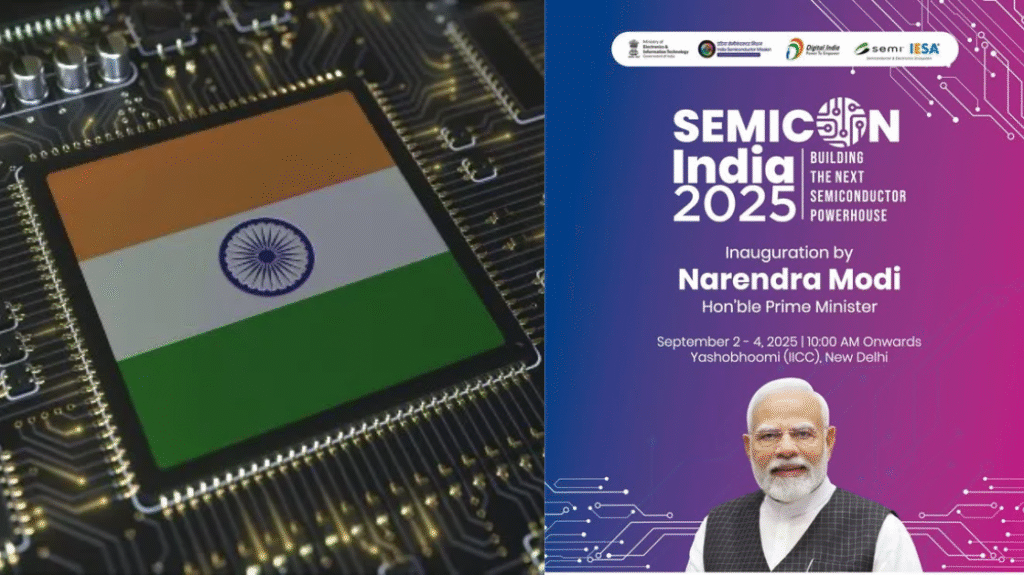
Prime Minister Narendra Modi inaugurated the flagship Semicon India 2025 summit at Yashobhoomi, New Delhi, on September 2. This landmark event signals India’s bold leap toward building a resilient semiconductor ecosystem. With robust policy push and global collaboration, the Semicon India 2025 event is set to reshape the nation’s technological destiny.
India’s Chip Ambitions: From Design to Production
India already hosts about 20% of the world’s chip-design engineers, making it a major design hub. The semiconductor consumption in India is projected to soar to $100–120 billion by 2030, marking a massive growth opportunity.
Prime Minister Modi’s inauguration set the tone. The summit, running from September 2–4, focuses on building a robust, sustainable semiconductor sector, from fabrics and AI to R&D and smart manufacturing.
What Makes Semicon India 2025 Stand Out
- Massive Scale: More than 350 exhibitors from 33 countries are participating—the largest ever for India’s chip show.
- High-Level Stakeholders: PM Modi will speak at sessions and lead a CEOs’ roundtable, pushing for strong international partnerships.
- Future-Ready Focus: Key themes include semiconductor fabs, packaging projects, research collaborations, and advanced manufacturing readiness.
Policy Power: Backing from ISM & Incentives
The summit is backed by the India Semiconductor Mission (ISM), the strategic node within MeitY tasked with lifting India’s semiconductor ecosystem. Under the Semicon India Programme, a staggering ₹76,000 crore ($9–10 billion) in support has been approved.
One standout initiative is the Design Linked Incentive (DLI) scheme, helping startups design chips in India. Already, 23 chip design projects have received sanction under this scheme, powering foundations for future innovation.
Fab Roll-Outs & Global Investments
India isn’t just dreaming—it’s acting. The government has approved 10 semiconductor manufacturing units across the country, supported by both central and state incentives.
Global players are taking notice. Companies like TSMC, Applied Materials, Delta Electronics, and others are eyeing India’s tech gaps as future opportunities to invest, localize equipment manufacturing, and train talent.
Tech Talent: Hiring Surge Fuels Momentum
A vibrant chip ecosystem demands talent—and that’s arriving fast. Semiconductor firms are aggressively hiring freshers, offering starting salaries of ₹6–12 lakh, far above typical IT roles.
Engineering students from tier-2 and tier-3 colleges are especially benefiting. Internships—offering ₹40k–₹50k per month—are now vital for entry into chip design and hardware jobs. Experts believe that initiatives like this will bridge the longstanding skills gap in semiconductor manufacturing.
Why Semicon India 2025 Matters
India’s electronics ecosystem is forecasted to grow from $38 billion (2023) to more than $100 billion by 2030, integrating digital technologies into everyday life. This summit is India’s showcase for aspiring to join the global trillion-dollar chip market.
With strategic partnerships, talent pipelines, and government backing, Semicon India 2025 launches India’s journey to semiconductor self-reliance. It’s not just a conference—it’s a movement transforming India into a chip powerhouse.
To read more Indian Laws and news, visit Legal Guide India