Overview: A Personal Tragedy Amid National Turmoil
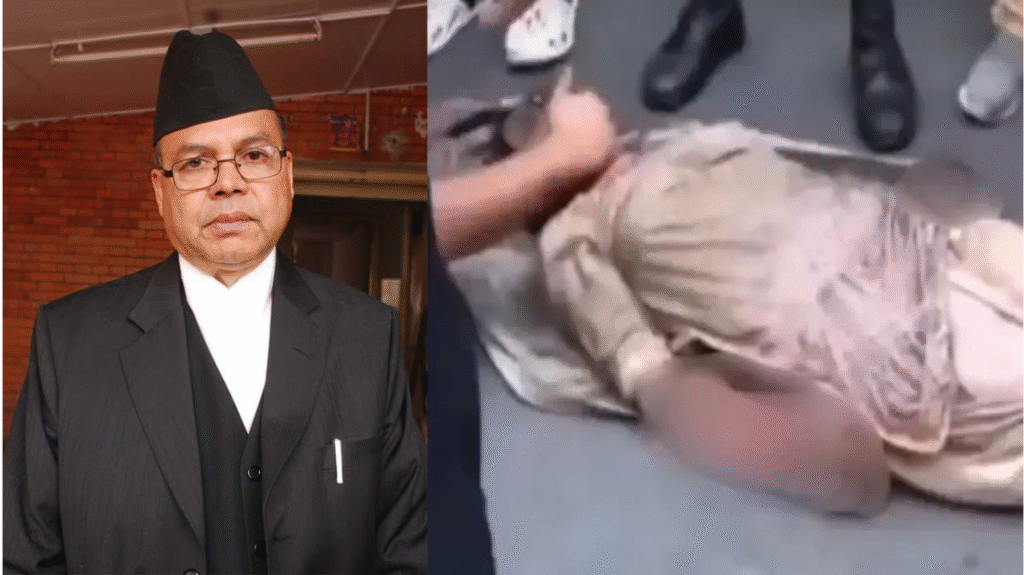
Once hailed as a symbol of Nepal’s democratic progress, former Prime Minister Jhalanath Khanal now finds himself at the heart of tragedy. On September 9, 2025, in the heat of violent Gen Z-led protests, his home in Dallu was set ablaze by mob action. His wife, Rajyalaxmi Chitrakar, tragically succumbed to burn injuries after being trapped inside the house. The attack illustrates how civic unrest can cut deeply into the personal lives of national leaders.
The Devastation of Gen Z Unrest in Nepal
Roots of the Gen Z Protests
Fuelled by the government’s abrupt ban on 26 major social media platforms—including Facebook, X, YouTube, and Reddit—young Nepalese, especially Gen Z, rallied in protest. This digital clampdown coincided with rising frustration over corruption, inequality, and nepotism among the political elite.
Escalation to Violence
Protests quickly turned violent. Security forces deployed tear gas, water cannons, rubber bullets, and, in some areas, live ammunition. At least 19 civilians were killed, with hundreds injured in clashes across Kathmandu and beyond. In a symbolic flashpoint, protesters set fire to government landmarks—including Parliament and Supreme Court buildings—marking one of the worst civil unrest episodes in recent history.
Khanal’s Home: From Residence to Tragedy
In the early hours, protestors targeted the Dallu residence of Jhalanath Khanal. Although the former prime minister was evacuated safely by the army, his wife remained in the burning home. Rushed to Kirtipur Burn Hospital, she could not survive her injuries.
Political Fallout: Resignation and Rising Tensions
The unrest quickly prompted seismic political changes. Prime Minister KP Sharma Oli resigned amid mounting public pressure and international condemnation. Notably, the Gen Z movement displayed immense reach—forcing airport closures and compelling India to issue travel advisories.
Legal Perspectives & Accountability
- Violence against civilians during protests—like arson and lynching—calls for swift legal action under Nepal’s criminal laws on murder, arson, and violence against protected persons.
- State failure to safeguard civilian lives may lead to investigations into lapses by security forces or public officials.
- Restrictions on legitimate protest: While governments have powers to regulate speech, blocking digital platforms and forcibly suppressing demonstrations raise serious constitutional rights concerns—especially about freedom of expression.
What Comes Next?
| Next Steps | What to Watch |
|---|---|
| Public Inquiry | Demand for investigation into protest violence, fire at Parliament, and Khanal’s tragedy |
| Political Rehabilitation | Whether a successor government will respond to Gen Z’s demands |
| Legal Reforms | Focus on balance between digital regulation and civil liberties |
| Social Healing | Calls for public dialogue and reconciliation in Nepal’s fractured polity |
About Jhalanath Khanal
Jhalanath Khanal, born in Ilam to a hill Brahmin family, has served as Prime Minister of Nepal and remains a senior leader in the Communist Party of Nepal (CPN). Known for his pro-democracy ethos, he famously entered an inter-caste marriage with Rajyalaxmi Chitrakar—a personal stand that reflected his social viewpoint. His legacy now intertwines with tragedy, adding gravity to the nation’s current political convulsions.
Conclusion: A Catalyst for Change and Reflection
The death of Jhalanath Khanal’s wife during the Gen Z protests is more than news—it’s stark proof of Nepal’s volatile political moment, where cries for reform led to fire and fatal consequences. The tragedy underscores how democratic systems can be threatened when civic trust breaks down.
As Nepal grapples with the aftermath, attention must turn to legal redress, political reform, and societal healing, especially in honoring Rajyalaxmi’s memory and protecting citizens from similar fates.
To read more Indian Laws and news, visit Legal Guide India