
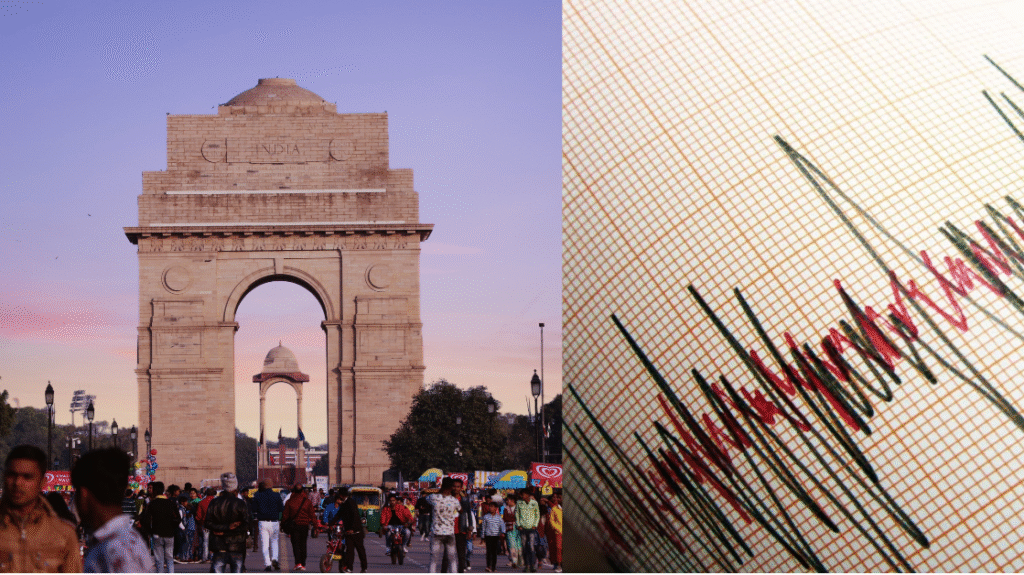
On Thursday morning (10 Jul 2025), a 4.4-magnitude earthquake rocked Delhi‑NCR at 09:04 AM, with the epicenter in Jhajjar, Haryana. Tremors rattled buildings and office spaces across Noida, Gurugram, Faridabad, Ghaziabad, and even Meerut and Shamli in western Uttar Pradesh.
People reported feeling the tremors for 10–15 seconds, describing it as one of the longest quakes they’d experienced. Fortunately, no casualties or damage have been reported so far.
Why Delhi Is Seismically Vulnerable
Delhi falls within Seismic Zone IV, a high‑risk zone on India’s earthquake map, due to several fault lines and its proximity to the Himalayas. Past quakes above magnitude 5 have rattled the capital, and the risk remains high .
Delhi Disaster Management Authority (DDMA) categorizes the region as a moderate-to-high hazard zone and continues to advocate for building safety upgrades, although no current seismic code is mandatory for all structures.
Social Media and Public Reaction
- Delhi residents flooded X/Twitter with reactions like: “Immediately ran out of homes… felt a scary tremor”
“Longest earthquake I’ve felt in a VERY long time” - Light-hearted reactions also appeared online, weaving humour into the event—streaming memes that joked “Nature playing Squid Game with us” with tremors and recent floods
Authorities Respond: Safety Measures & Guidance
- NDRF Advisory: The National Disaster Response Force issued calm-first guidance—avoid panicking, use stairs, and if driving, pull over in open areas.
- Delhi Metro Halted Trains: As a precaution, metro trains paused briefly to assess safety.
Meanwhile, mild tremors coincided with monsoon flooding, with social media flooded with memes and jokes about Delhi’s “double trouble”.
How to Stay Prepared in Future Quakes
- Enable earthquake alerts via Google’s emergency features on your phone.
- Strengthen your knowledge: Understand NDRF guidance and earthquake safety protocols .
- Home safety audits: Secure heavy furniture, maintain escape routes, and practice emergency drills with your family.
Stay Updated: Key Advisories
- NCS Tweets provide data and quake alerts
- NDRF issues “dos and don’ts” for safety
- DDMA shares local disaster alerts via official channels
To read more Indian Laws and news, visit Legal Guide India

