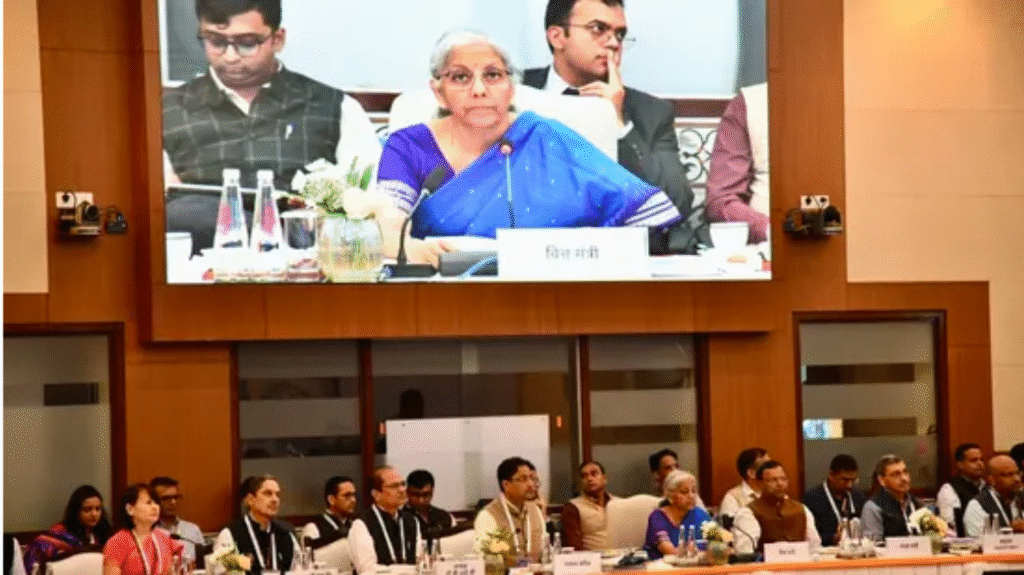
In its latest session, the GST Council meeting chaired by Finance Minister Nirmala Sitharaman, crucial decisions were made on new gst rates that could change the way Indians experience taxation in daily life. From simplified tax slabs to relief for households, the meeting has been seen as one of the most important gst reforms since the launch of Goods and Services Tax in 2017.
The council, which brings together representatives from the Centre and all states, met in New Delhi to finalize rate revisions, structural changes, and compliance relaxations. The timing is significant, with festive demand around the corner and inflationary pressures hurting the middle class. Let’s break down the highlights and what they mean for you.
Two-Slab GST Structure: A Major Simplification
One of the biggest takeaways from the GST meeting is the decision to move towards a two-slab GST system. Until now, India operated with four major slabs—5%, 12%, 18%, and 28%. This complicated structure often confused consumers and businesses.
The council has now approved a simplified version:
- 5% slab for essential goods and mass consumption items
- 18% slab for most other products and services
Luxury and sin goods such as tobacco, pan masala, and aerated drinks will continue to attract a higher cess, keeping them effectively in the 28–40% range. According to the finance ministry, this move will reduce litigation, ease compliance, and make GST more predictable.
Relief for Households: Essentials Get Cheaper
The GST meeting brought cheer for households, particularly in food and grocery categories. Items such as paneer, curd, buttermilk, and jaggery, which were earlier in the 12% bracket, have now been moved to 5%. This ensures that daily kitchen staples are more affordable, especially for lower and middle-income groups.
Additionally, items like packaged flour, edible oils, and pulses will see reduced taxation, offering a boost to household budgets. Traders and kirana shop owners have also welcomed the move, expecting higher demand during the festive season.
Sin Goods and Luxury Items to Attract Higher GST
While essentials became cheaper, the council kept a strict stance on goods considered harmful to health. Cigarettes, pan masala, and gutka will now attract up to 40% GST, including cess. Soft drinks and energy beverages have also been categorized under the highest slab, a move aimed at discouraging excessive consumption.
Luxury items such as high-end cars, premium watches, and exclusive lifestyle goods will continue to face the higher slab, ensuring that the revenue impact of reducing rates on essentials does not hurt overall collections.
Technology and Compliance Reforms
The GST meeting also focused on reducing the compliance burden for small businesses. Several key announcements include:
- E-invoicing relaxation for businesses with turnover below ₹5 crore.
- Simplified return filing process with pre-filled data, reducing manual errors.
- Stricter tracking for fake invoicing and tax evasion through advanced AI tools.
- Extension of deadlines for certain states affected by natural disasters.
These measures aim to balance ease of doing business with the need to maintain strong revenue inflows for both Centre and states.
New GST Rates Impact on States and Revenue
States have often expressed concerns about losing revenue due to GST rate cuts. To address this, the Centre has assured compensation through a mix of higher cess on luxury goods and improved tax collection efficiency. Officials estimate that despite the reduction on essentials, better compliance will ensure no major loss of revenue.
Economists point out that this is also a politically significant move, as multiple states are heading into elections. By reducing taxes on essentials, the government is sending a signal of relief to households without significantly hurting state finances.
Industry and Expert Reactions
Industry bodies such as FICCI and CII welcomed the simplification of slabs, calling it a “long-pending reform.” Retailers believe that cheaper essentials will boost consumption, especially in rural markets.
Tax experts, however, have flagged that moving from four slabs to two is only the first step. They suggest that services, which mostly fall under the 18% slab, could still feel the pinch. For instance, hospitality and tourism sectors, already hit by slowdown, had lobbied for a cut but did not receive one.
Opposition parties, meanwhile, criticized the timing, calling it an “election gimmick.” They argued that while essentials have become cheaper, medical services and fuel remain outside the GST framework, leaving a large burden on citizens.
Long-Term Impact of the GST Meeting
The decisions taken in this GST meeting are expected to have both short-term and long-term effects.
- Short-term: Relief for households, higher demand during festivals, and smoother compliance for small businesses.
- Long-term: A move towards a globally competitive GST structure, reduced disputes, and potentially better foreign investment due to predictability in taxation.
If the system stabilizes, India may even explore the possibility of moving to a single GST rate in the future, which would make the regime simpler and more transparent.
Conclusion
The latest GST meeting has sent a strong message: India is serious about tax reforms that benefit both citizens and businesses. With rate cuts on essentials, tougher rules for sin goods, and simplified compliance, the council has attempted to strike a balance between relief and responsibility.
Whether these changes translate into sustained economic benefits will depend on effective implementation and cooperation between Centre and states. For now, however, households can look forward to some relief in their festive shopping, while businesses welcome a more stable and simplified tax system.
To read more Indian Laws and news, visit Legal Guide India