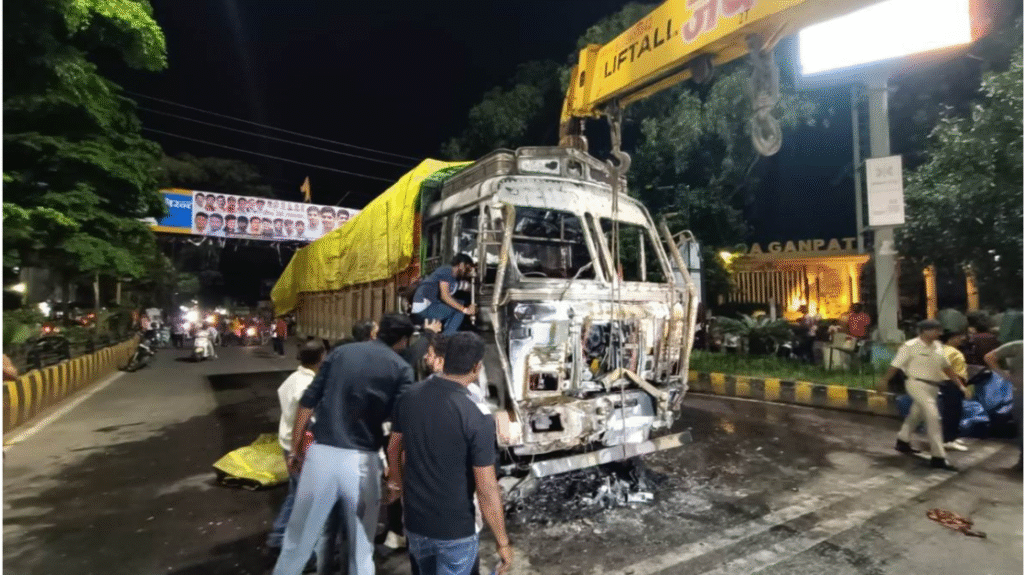
On the evening of September 15, 2025, a catastrophic road accident occurred on Airport Road near Bada Ganpati temple, Indore. A speeding truck lost control, ploughed into multiple vehicles, pedestrians, and when a motorcycle got trapped beneath it, friction caused the motorcycle to burst and the truck caught fire. At least two people died instantly, and many others suffered serious injuries. Eyewitnesses describe carnage: screams, severed limbs, vehicles crushed, and panic among bystanders.
The driver has been arrested. Authorities are investigating several possible violations: driving under influence of alcohol, entry of heavy commercial vehicles before permitted hours, and violation of traffic rules. Local residents are outraged, demanding accountability and stricter enforcement.
Legal Duties & Regulations That May Have Been Breached
1. Road Traffic Laws & Driving Under Influence
- Under the Motor Vehicles Act, 1988, driving under the influence (DUI) is penalised. If the driver was intoxicated, this aggravates the offense.
- Over-speeding, reckless driving are offenses under MV Act and local traffic regulations. Permits for heavy vehicles entering city limits often include timing restrictions.
2. Entry of Heavy Vehicles under Restricted Timing
- In Indore, heavy trucks are generally not permitted entry into certain busy city zones or roads before 11 PM. Reports say the truck violated this regulation.
- Violation of these norms may result in penalties under traffic law. It also can contribute to negligence claims if rules are known and ignored.
3. Negligence and Liability
- Legal standard of negligence demands: duty of care, breach, causation, and harm. The truck driver owed a duty to other road users to drive responsibly. Speeding, DUI, violating entry rules arguably breach that duty.
- Liability could extend to the vehicle owner, transport company, or those who allowed/authorized the truck’s entry before restricted hours. Under Indian law, owners can be held vicariously liable.
Victims’ Rights & Relief Measures
- Families of deceased can seek compensation under civil law. A suit for wrongful death/negligence may be filed.
- Injured victims may claim medical costs, loss of wages, and other damages.
- Criminal charges may include culpable homicide not amounting to murder (if death results from negligence), or other related offenses under IPC.
Role of Enforcement & Government Responsibility
- Investigation must be multi-pronged: forensic examination, intoxication report, permit validity, CCTV footage. If the driver is drunk, breathalyzer test and medical examination records are crucial.
- Local traffic enforcement, city traffic police, and municipal / district legal authorities have responsibilities: ensuring that heavy vehicles comply with traffic schedules and route permissions.
Precedents & Case Law
- Indian courts have several precedents where speeding or drunk drivers were held liable. In many cases, the courts awarded compensation plus legal costs to victims’ families.
- Judgments have considered improper entry of heavy vehicles into restricted areas, and enforcement of weight/time regulations as part of due diligence.
Public Outcry & Social Accountability
- The incident triggered widespread outrage: protests at the accident site, social media condemnation, demands that authorities be held accountable.
- Questions are being raised: how did the truck enter before restricted hours; whether traffic management was lax; whether signage or barricades were in place.
Legal Challenges & Criticisms
- Delay in enforcement: often regulations exist but are not enforced; truck permits, route controls are violated without consequence.
- Victims often face bureaucratic delays, lack of timely compensation.
- Infrastructure issues: Poor road design, traffic signal problems, inadequate lighting, absence of proper vehicle inspections, etc., contribute to accidents.
What Courts & Government Actions Could Follow
- Filing of FIR (First Information Report) with charges including negligent driving, possible DUI, causing death by negligence under IPC sections.
- Government may launch an inquiry to investigate systemic failures: traffic regulations, timings, enforcement lapses.
- Possible administrative action: revoking licenses, imposing heavier penalties, revising laws for stricter control.
Conclusion
The tragic accident on Indore’s Airport Road reveals not just a moment of reckless driving but deeper systemic issues: enforcement of traffic law, regulation of heavy vehicle movement, and ensuring safety for pedestrians and road users. Legally, there is a strong case for negligence, breach of traffic rules, and liability for both driver and owner. Moving forward, strict legal accountability, infrastructural improvements, and proactive governance will be essential to prevent repeat tragedies.
To read more Indian Laws and news, visit Legal Guide India