
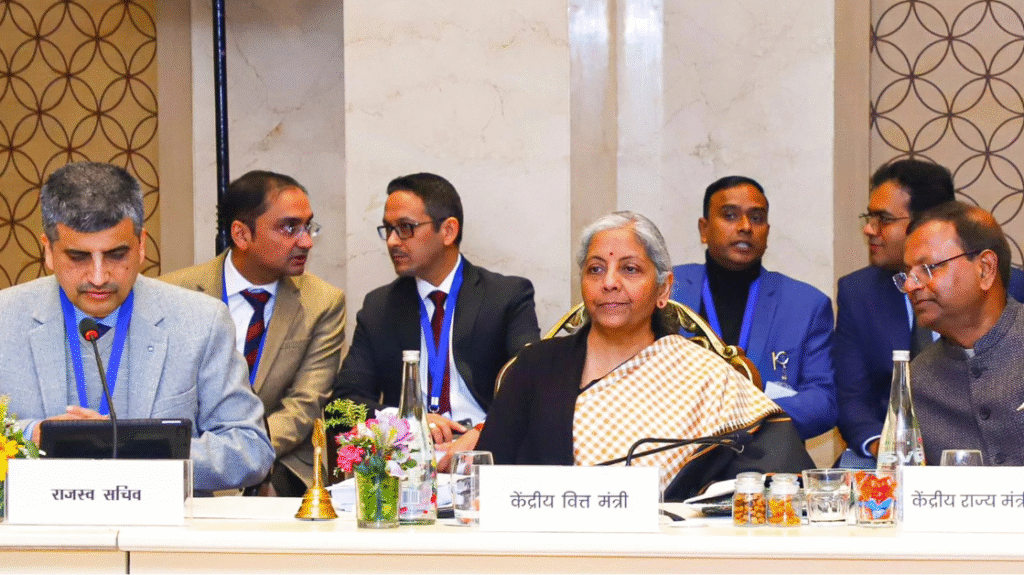
Today and tomorrow, trade, finances, and everyday spending hang in the balance as the GST meeting shifts from routine to revolutionary. Chaired by Finance Minister Nirmala Sitharaman, the 56th GST Council convenes in New Delhi amid expectations of bold changes aimed at simplifying tax slabs and easing pockets across India.
What’s on the Agenda at This Crucial GST Meeting
Two-Slab Restructuring Under Consideration
A major highlight of the GST meeting is the proposed consolidation of the current four-tier structure into two primary slabs—5% and 18%—paired with a higher 40% rate for luxury and sin goods. Most items presently taxed at 12% or 28% could shift into the lower slabs to benefit consumers.
Relief for Everyday Essentials
Under this reform, essentials like ghee, butter, toothpaste, shampoo, cheese, and milk powder are expected to become cheaper—moving from 12% to 5%. Consumer durables such as televisions, washing machines, and refrigerators may shift from 28% to 18%, offering tangible savings.
Tax on Electric Vehicles and Sin Goods
The GST meeting also covers potential tax cuts for electric vehicles (suggested at 5%) to encourage clean energy adoption. Meanwhile, sin and luxury goods—like premium cars, alcohol, and tobacco—may face steep taxes of 40%.
Revenue and State Compensation Concerns
While the simplicity of a two-slab system is attractive, states worry about a potential revenue shortfall of ₹70,000–80,000 crore. Talks include exploring compensation models to address these gaps.
Why This GST Meeting Matters
Consumer Impact
Cuts in GST rates mean more affordable goods for families. FMCG staples and electronics could both see immediate price drops, making everyday life easier.
Industry Boost
Auto manufacturers, consumer durables, and insurance companies stand to benefit from lower tax burdens, which may stimulate demand in the festive season ahead.
Market Sentiment
Market indices are closely monitored amid speculation of GST reform. Investors hope that clearer slabs and tax relief will spark growth in consumption-driven sectors.
Streamlined Governance
Discussions include next-gen reforms like pre-filled returns, faster refunds, and simplified compliance—strengthening the ease of doing business under the GST regime.
Quick Take: Key Outcomes We’re Watching
| Reform Area | What to Watch For |
|---|---|
| GST Slab Structure | Move to 5% & 18% as main slabs |
| Impacted Goods | Cheaper essentials; electronics and cars more affordable |
| Special Slabs | 40% on luxury/sin goods |
| Fiscal Impact | Revenue loss mitigation and state compensation |
| Compliance | Modernization via simplified tax processes |
Final Thoughts on the GST Meeting’s Significance
With inflation pressure still where it is, this GST meeting offers a significant economic lever. Simplified slabs and lower taxes could deliver real relief to households while maintaining integrity in India’s revenue system.
While challenges like state fiscal concerns and system complexity persist, if executed well, these reforms may define GST 2.0—a leaner, transparent tax framework aligned with modern India’s growth needs.
To read more Indian Laws and news, visit Legal Guide India

Pingback: GST Reforms 2025: India to Move to Two-Slab Tax Structure